
Fully automatic SPD comparison and programming solution for memory modules
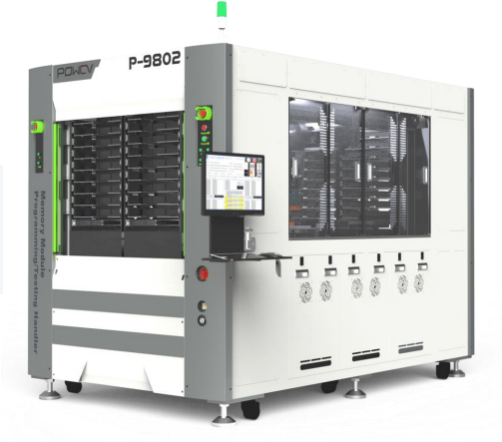
The memory module testing equipment is a device capable of automatically reading and testing the codes of memory module cards loaded in trays.
The main function is to utilize the servo transfer mechanism to orderly arrange the products in the tray and transport them to the testing port for calibration, testing, and other functions; reducing manual labor and improving efficiency and yield.
The equipment is equipped with a synchronous barcode recognition system, which can simultaneously recognize the barcodes of multiple products. It conducts functional tests based on the corresponding barcode information and test port positions. The equipment automatically operates the tray, closes the tray, and adjusts the card spacing to accommodate the test position spacing.
Equipped with a synchronous barcode recognition system, the device can simultaneously recognize the barcodes of multiple products. It conducts functional tests based on the corresponding barcode information and test port positions. The device automatically operates the tray, closes the tray, and adjusts the card spacing to accommodate the test position spacing.
Equipment features:
1. Four sets of layered drawer-type lifters
2. Multiple barcode recognition engines.
3. Dual-actuator transfer robot.
4. The multi-channel parallel testing architecture can accommodate and test 5 memory modules simultaneously, significantly reducing batch testing time. Coupled with intelligent algorithm optimization processes, the overall efficiency is improved by 40% compared to traditional equipment.
5. The multi-channel parallel testing architecture can accommodate and test 5 memory modules simultaneously, significantly reducing batch testing time. Coupled with intelligent algorithm optimization processes, the overall efficiency is improved by 40% compared to traditional equipment.
Compatible
6. Write-related tests applied to memory modules, such as SPD information and information comparison.
7. Functional testing, such as operations like cyclic read-write modification and deletion (implemented with the SLT testing scheme).
8. Fully compatible with mainstream memory module specifications such as DDR3, DDR4, and DDR5, covering various products from low-frequency to high-frequency. Whether it's the compact size of notebook memory modules or the high-capacity models of desktop memory modules, we eliminate your compatibility worries.